





BANGKOK, October 29, 2026. Bonree Data exhibited for the first time at the 41st BFSI IT Summit Thailand in Bangkok, showcasing its Bonree ONE unified intelligent observability platform. Our overseas technology lead also delivered a keynote, The Next Stop for Observability: LLM-Powered Root Cause Analysis. The session explored how large language models can help financial institutions find faults faster and keep digital services reliable in increasingly complex IT environments.
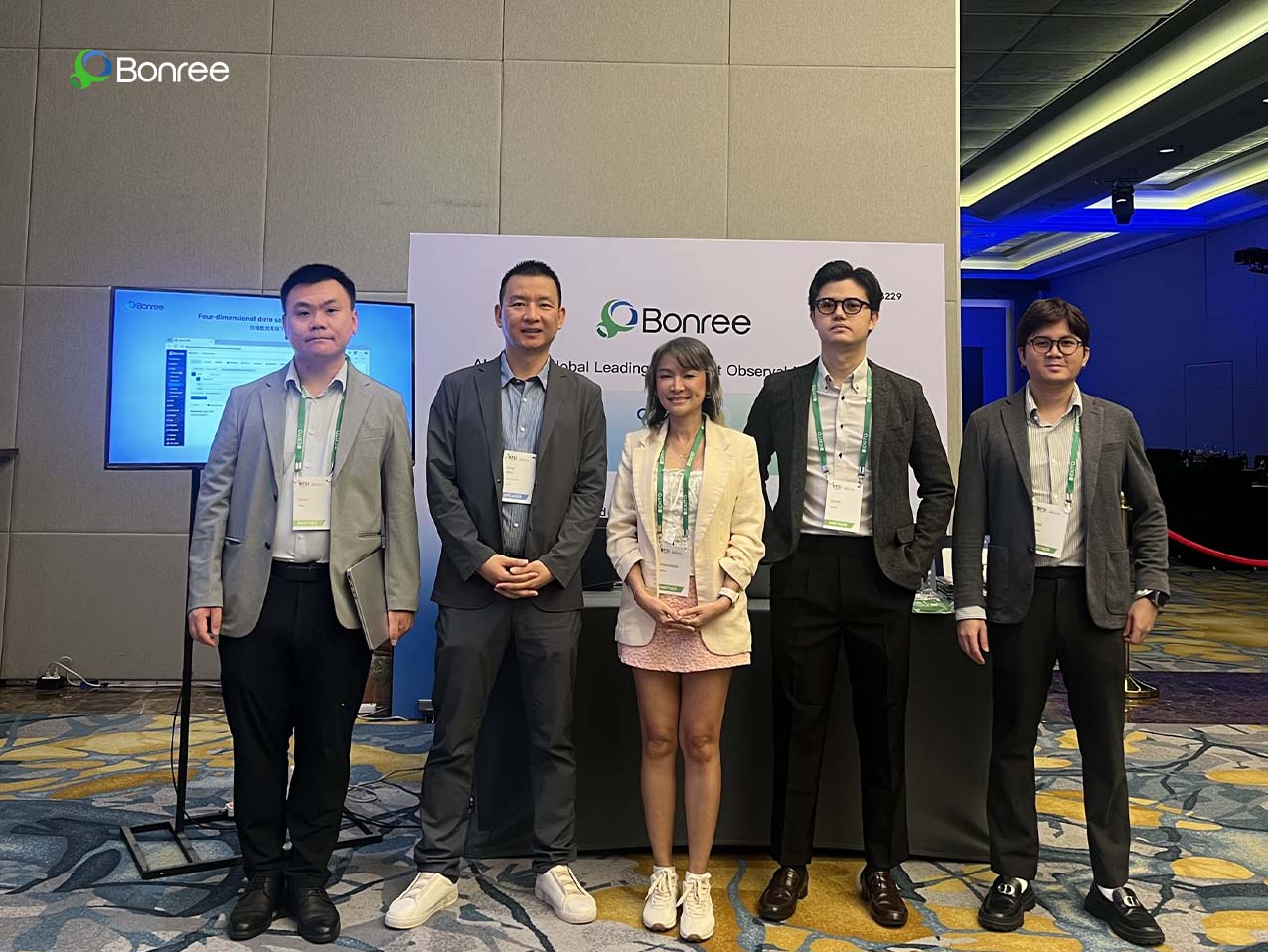
The summit focuses on banking, financial services, and insurance (BFSI) and drew more than a hundred senior technology and business leaders from Thailand’s financial sector. Discussions centered on fintech innovation, digital transformation, and day-to-day operations. For Bonree, the event marks a concrete step in expanding into Thailand and deepening our presence across Southeast Asia, and a further step in bringing China-developed observability technology to a global audience.
From Reactive Firefighting to Closed-Loop Operations
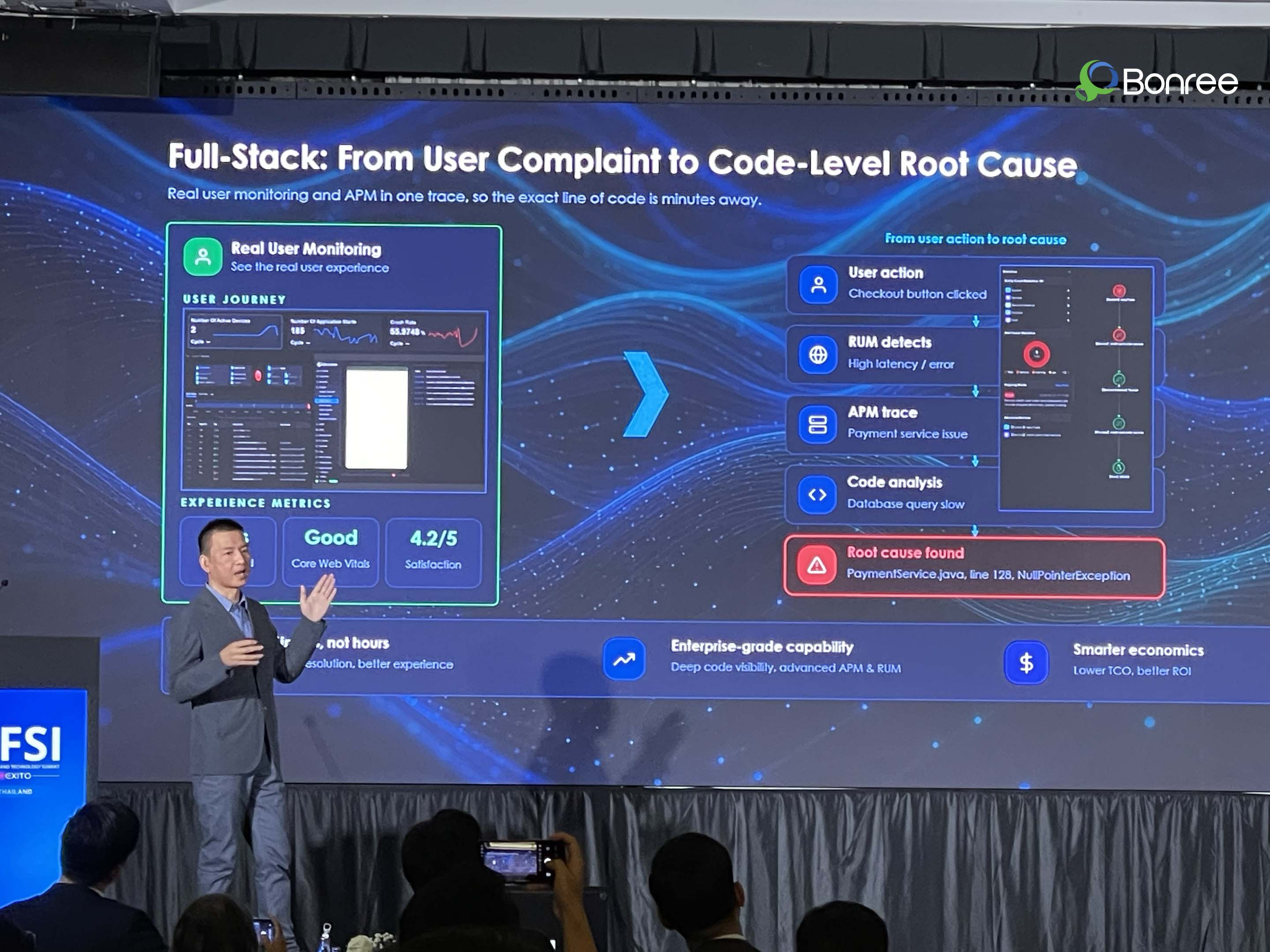
In his keynote, our overseas technology lead showed how Bonree ONE combines unified observability data, AI-driven analysis, and automation tooling to help financial institutions detect, diagnose, and resolve incidents. Three ideas anchored the talk.
One data foundation, end-to-end visibility. Bonree ONE brings application performance, infrastructure, real user, and network performance monitoring together with business analytics and AI observability. A single data model links metrics, logs, traces, topology, code-level data, and user behavior. Teams can follow a problem from what the end user experienced, through application services, down to the underlying infrastructure, with the evidence needed for diagnosis in one place.
LLM-powered root cause analysis for complex failures. In modern financial systems, services depend on one another in ways that are hard to untangle. Engineers often jump between monitoring tools and piece the story together by hand. Bonree ONE correlates anomalous signals automatically, identifies likely root causes, and estimates business impact. Sage AI, our AI agent workbench for operations, moves troubleshooting from manual investigation toward AI-assisted analysis.
From diagnosis to resolution. Through MCP tool integration and automated orchestration, Sage AI connects to ticketing systems, operations tools, and automated workflows to help carry out fixes. It then checks fresh observability data to confirm the fix worked. The result is a closed loop of detection, root cause analysis, remediation, and verification, and a shift from reacting to incidents to handling them proactively.
At the Booth: Bonree ONE in Action
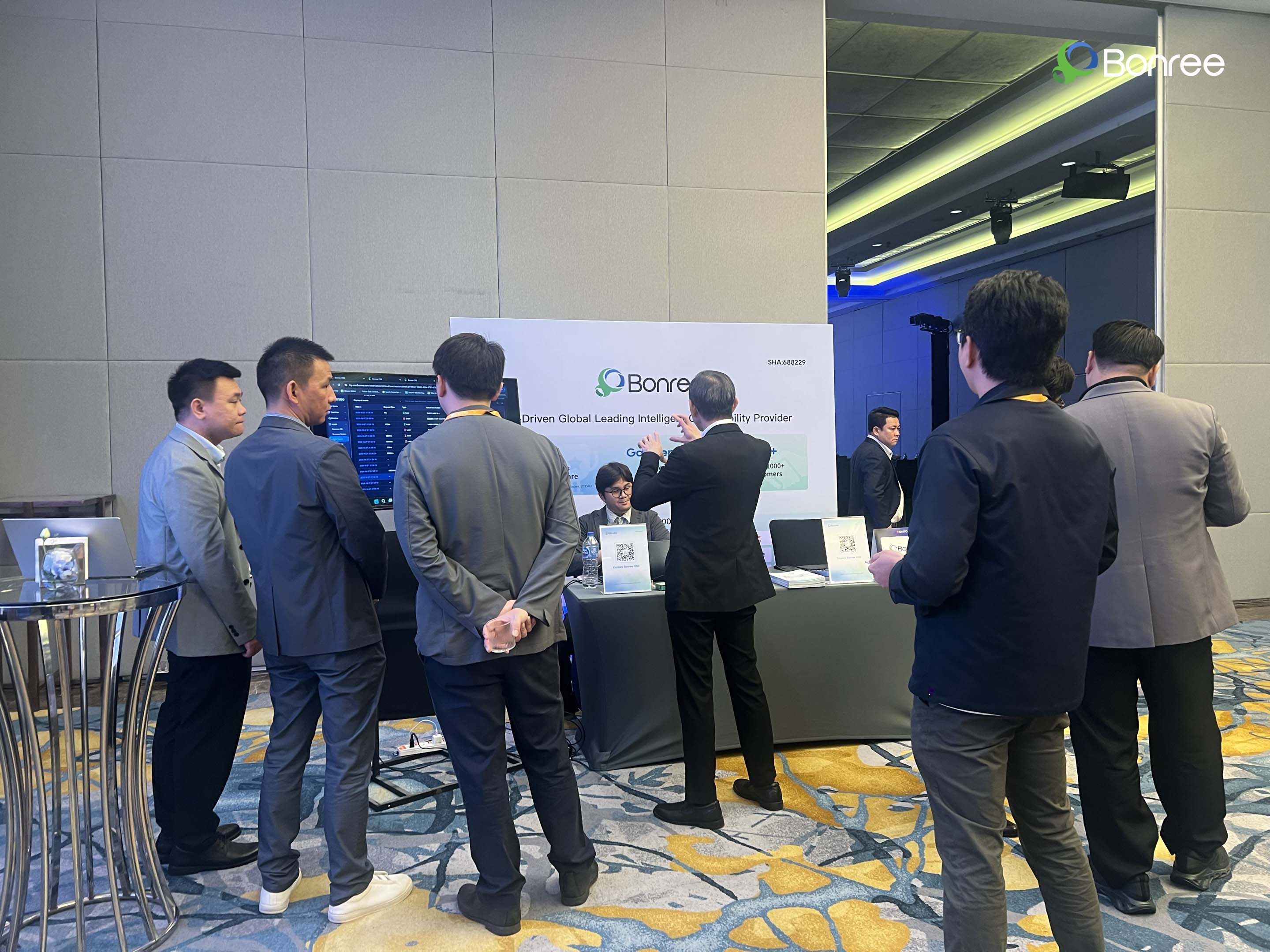
At our Bonree ONE showcase, we focused on what financial institutions care about most: system stability, business continuity, and operational efficiency. Live demos and scenario-based walkthroughs showed how the platform extends from full-stack observability to AI-native operations.
Bonree ONE is our unified intelligent observability platform for the AI era, built on one data collection layer, one data model, and one permission system. It covers application performance, infrastructure, log analytics, and network performance, and brings five types of telemetry together: metrics, logs, traces, events, and profiling. Data is linked from the end-user experience through application services and infrastructure down to the code, giving teams true end-to-end visibility. By removing the data silos between disconnected monitoring tools, Bonree ONE helps teams spot anomalies and pinpoint faults faster, cutting fault location time from hours to minutes.
For teams running large models and AI agents, Bonree ONE adds AI observability: model call tracing, latency analysis, and token usage and cost monitoring. It works with popular agent frameworks such as LangChain, LangGraph, and Dify, and gives a single view across models hosted in the public cloud and those deployed on-premises.
Sage AI, the in-house AI agent workbench built into Bonree ONE, lets users query data and run inspection analyses in natural language. It covers 80% of routine operations work and over 90% of automated operations scenarios. Combined with intelligent analysis, tool integration, and automated orchestration, it supports anomaly detection, fault assessment, root cause analysis, and remediation.
During the summit, our overseas technical team spoke with decision-makers and technical experts from banks, insurers, securities firms, payment providers, and digital asset companies, as well as representatives from regulators and public-sector organizations. Conversations covered business continuity in financial services, fault diagnosis across multi-cloud architectures, observability for AI applications, and building operations agents. These exchanges gave us a clearer view of the operational challenges Thai financial institutions face and where the market is heading. They also help lay the groundwork for local partnerships and real-world deployments.
Rooted in Thailand, Serving the World
Appearing at BFSI IT Summit Thailand was an important opportunity to engage the local fintech community and learn more about what Southeast Asian markets need. Bonree is an AI-driven intelligent observability provider with operations across Chinese mainland, Hong Kong SAR, Macao SAR, Singapore, Malaysia, Thailand, Indonesia, and the Middle East. We have delivered benchmark customer deployments in Hong Kong, Macao, and Malaysia, and we continue to build experience serving overseas customers and adapting to the needs of each market.
Looking ahead, Bonree will keep building on the Bonree ONE platform, deepening our work across financial services, securities, telecommunications, manufacturing, and government and enterprise sectors, and advancing our AI-native capabilities. We will also strengthen collaboration with customers and ecosystem partners around the world, and tailor our approach to the realities of each market, so that intelligent observability can take root in more industries and business scenarios and support digital transformation across the global financial sector.