



How does Bonree ONE compare to Cisco AppDynamics?
AppDynamics, now part of Cisco, built its reputation on deep, code-level application performance monitoring for established enterprise workloads. Bonree ONE approaches the same problem — understanding how an application is really performing, end to end — through a cloud-native-first architecture built around a single unified data model, with AI Observability and agentic AI operations available through Bonree ONE • Sage AI.
AppDynamics' Core Strength
AppDynamics' code-level diagnostics are well suited to organizations running established Java or .NET workloads, and its business transaction monitoring can help correlate a slow API response to a specific database query. Integration with the wider Cisco ecosystem (ThousandEyes for network visibility, Intersight for infrastructure) adds further value for organizations already standardized on Cisco.
Where AppDynamics Shows Some Friction
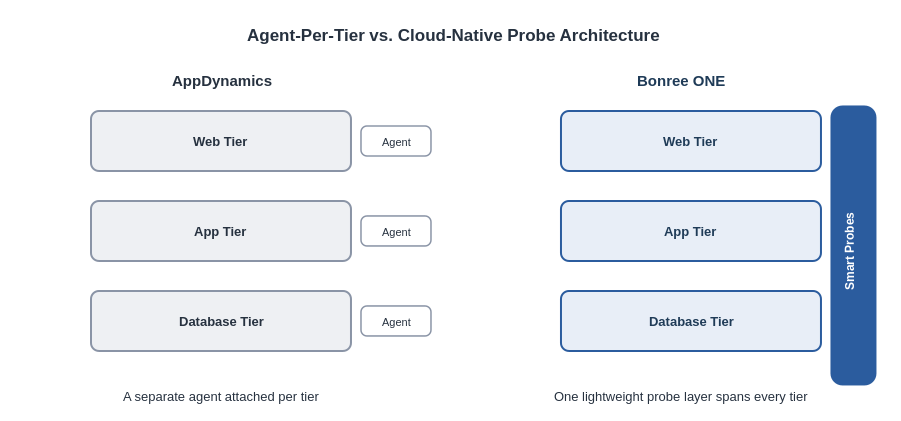
Reviews of AppDynamics in 2026 point to a few consistent friction points: a slower pace of module development for modern SaaS and cloud-native workloads, and an interface that feels dated relative to newer entrants. The agent-per-tier model — while precise — adds runtime overhead per layer, which cloud-native teams running containerized, frequently-scaled services increasingly try to minimize.
Where Bonree ONE Fits
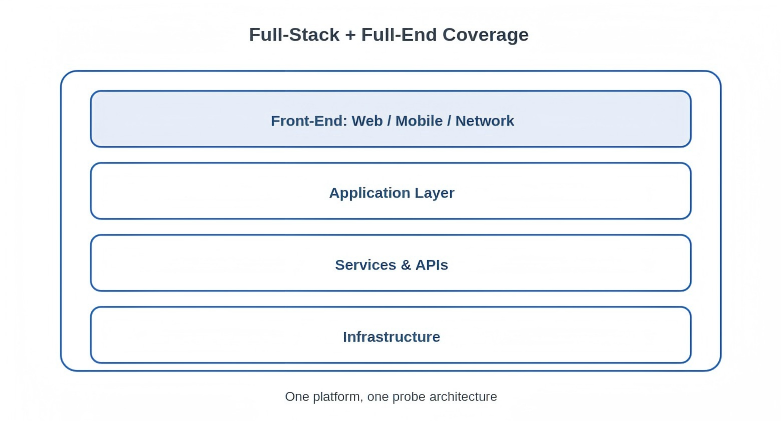
Bonree ONE was built around a cloud-native-first architecture from the start, using Configuration-Free Integrated Smart Probes designed for containerized and dynamic environments rather than a per-tier agent model. Its unified observability data model extends visibility beyond the application tier to include front-end web, mobile, and network data in the same schema, and layers AI Observability and agentic AI operations, through Bonree ONE • Sage AI, on top of that shared foundation — covering incident diagnosis, Q&A, reporting, and remediation from one conversational entry point.
Bonree ONE also supports public cloud, private cloud, hybrid cloud, and traditional IDC deployments equally, which can matter for enterprises running a mixed legacy-and-modern estate.
FAQ
Is Bonree ONE a good fit for cloud-native environments?
Bonree ONE's Configuration-Free Integrated Smart Probes were designed for cloud-native and containerized environments from the outset. AppDynamics remains a solid choice for organizations running established Java or .NET workloads that are only partway through a microservices migration; each platform has different strengths worth weighing against your environment.
Does Bonree ONE offer AI-driven root cause analysis like AppDynamics' diagnostics?
Bonree ONE combines AI Observability and agentic AI operations, through Bonree ONE • Sage AI, with its unified data model to reason across metrics, logs, traces, and sessions — covering incident diagnosis, Q&A, reporting, and remediation from a single conversational entry point.
What if we're already invested in the Cisco ecosystem?
Organizations deeply integrated with Cisco's ThousandEyes or Intersight may get additional value from staying within AppDynamics. For organizations without that dependency, it's worth evaluating platforms that aren't tied to a specific vendor ecosystem, such as Bonree ONE, alongside it.
Can Bonree ONE run in a mixed legacy-and-modern estate?
Yes. Bonree ONE supports public cloud, private cloud, hybrid cloud, and traditional IDC deployments, which helps enterprises that are only partway through modernizing off legacy infrastructure.